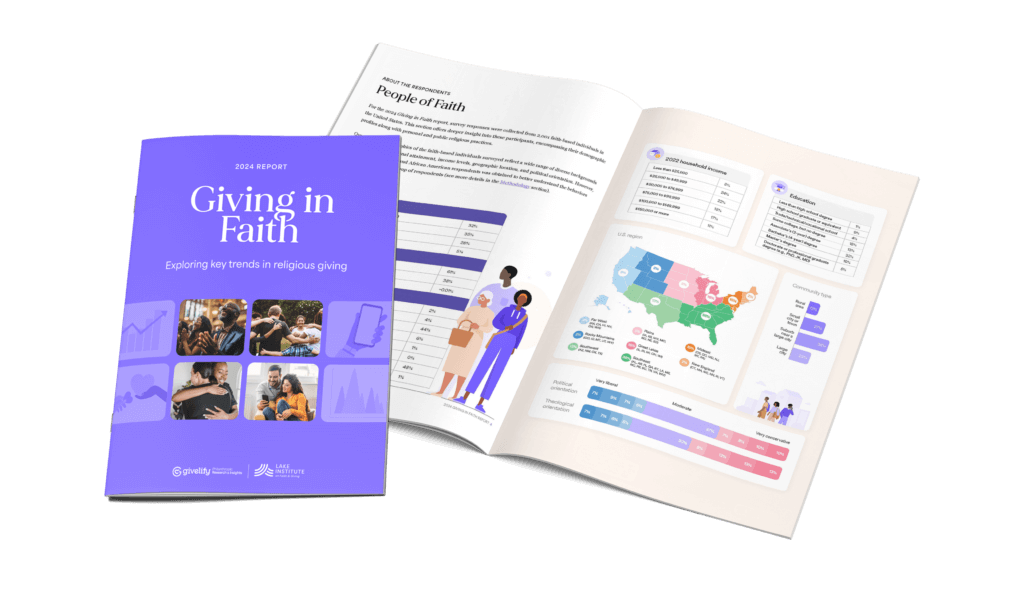
What is the Giving in Faith report?

The Giving in Faith report is a leading research report produced by Givelify Philanthropic Research & Insights, a research initiative of Givelify, with support from the Lake Institute on Faith & Giving, part of the Indiana University Lilly Family School of Philanthropy. Now in its fourth edition, the report examines how faith shapes generosity across the United States. It's designed for faith leaders, church leaders, ministry teams, researchers, and practitioners who want to understand the real motivations, behaviors, and trends driving faith-based giving.

What makes the Giving in Faith report different from other giving research?
Most giving research either focuses on nonprofit donors or treats faith-based donors as a single group. The Giving in Faith report takes a different approach by examining giving through the perspectives of donors, church leaders, and congregations. It combines survey research with real giving behavior from billions of donations processed through Givelify to better understand the motivations, habits, and psychology behind consistent giving.

What are the latest church giving statistics and trends?
Research from the 2026 Giving in Faith report shows that church giving remains stable, with many churches reporting steady or increased contributions and strong financial health. Faith-based donors continue to use both traditional and digital giving methods, as well as volunteering their time and making in-kind donations. The biggest opportunity isn’t total giving but helping donors give more consistently to strengthen ministries and community impact over time.

What does consistent giving mean?
The 2026 Giving in Faith report defines consistent giving as a pattern of regular monetary giving that occurs one or more times per month. The definition is designed to reflect how faith-based donors understand and practice generosity as a meaningful spiritual practice shaped by faith, personal values, and church teachings, including tithing.

Is consistent giving the same as automatic recurring giving?
No. The 2026 Giving in Faith report defines consistent giving by a donor’s giving behavior, not by the method they use to give. Most faith-based donors (76%) do not use automatic recurring giving and prefer their generosity to remain intentional. While recurring giving can help some donors maintain an existing habit of generosity, the report finds it works best as a tool to support already committed givers rather than as a universal solution for building consistent giving habits.

What does consistent giving in churches look like?
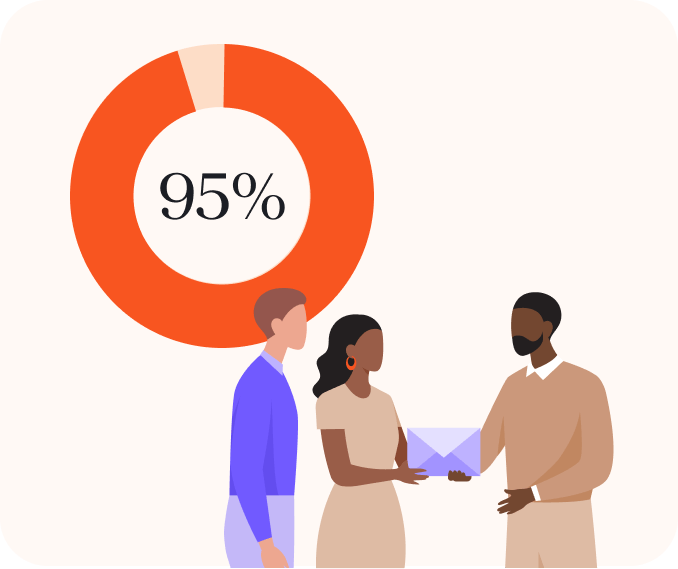
According to the 2026 Giving in Faith report, most faith-based donors aspire to give consistently, but far fewer do so in practice. While 95% of donors say they want to give one or more times a month, only about 30% currently do. Church leaders also tend to be optimistic about church giving patterns and overestimate how consistently their congregations give.
The report describes this disconnect as the invisible “consistency shortfall,” a gap that may limit opportunities to strengthen generosity habits, sustain ministries, and expand community impact. Even modest improvements in giving consistency could increase annual giving for a typical congregation by roughly $50,000.

How can I identify consistent givers in my church?
The 2026 Giving in Faith report identifies four research-backed donor profiles — derived from surveys of nearly 2,000 faith-based donors and behavioral data from 1.7M+ givers — that help faith leaders better understand giving patterns within their congregations. Each donor profile, Devoted Givers, Steady Givers, Awakening Givers, and Unengaged Givers, reflects different motivations, behaviors, and levels of giving consistency. Understanding each can help churches better support donors’ unique needs and strengthen generosity.

What are faith-based donor motivations for consistent giving?
According to the 2026 Giving in Faith report, consistent giving is shaped by a combination of spiritual motivations, personal behaviors, and church experiences that reinforce generosity over time. To better explain how giving habits form, the report introduces the Consistent Giving Model, a new research-backed framework that examines how motivations, opportunity, reinforcement, and intentional engagement work together to support lasting generosity habits.
While most faith-based donors aspire to give more consistently, only 30% do so in practice. Churches can help close this gap by clearly communicating impact, building trust, and supporting donors throughout their giving journey.

How can technology support consistent giving in my church?
The 2026 Giving in Faith report shows that certain digital tools can support consistent giving when they reinforce donor motivations and help sustain generosity habits over time. A field experiment conducted on Givelify’s Champions of Good program — a faith-informed digital giving experience built on the science of habit formation and reinforcement — found that donors who used its features, such as reminders, reflections, progress tracking, and recognition, made more donations and gave more overall than those who did not.
The report also found that automatic recurring giving tools work best for donors who already have established giving habits. For donors still building consistency, tools that encourage intentional engagement, reflection, and reinforcement may better support lasting generosity habits over time.

Does automatic recurring giving help grow consistent giving?
Yes, but recurring giving works primarily for donors who already have strong motivations to give consistently, existing consistency, and stable financial situations.
For many people of faith, giving is also an intentional expression of generosity and spiritual practice. The 2026 Giving in Faith report found that most faith-based donors (76%) do not use recurring giving, often because they want their giving to remain intentional. The report helps pastors and faith leaders better understand which donors may benefit most from recurring giving tools.