Menu

Close

Chapter 2 • 2026 GIVING IN FAITH REPORT
State of Church and Faith-Based Giving in 2025
Church giving remained strong in 2025 despite economic uncertainty. This chapter reviews church giving statistics and trends that faith leaders can reflect on to better understand generosity and prepare for what’s ahead.  
Church congregation sitting and facing forward, listening attentively in a room with green plants on walls.Church congregation sitting and facing forward, listening attentively in a room with green plants on walls.Church congregation sitting and facing forward, listening attentively in a room with green plants on walls.

Key takeaways

  • Churches that reflect on changing giving trends may be better positioned to strengthen ministries and community support.
  • Despite economic uncertainty, church giving remained resilient, supported by renewed in-person worship and growth in online giving.  
  • As in-person worship rebounds, generosity continues growing across both traditional and online giving.  

How this applies to faith leaders

  • Reflect on national church giving trends and how your congregation compares to prepare for future changes.  
  • Offer online giving, mobile giving apps, and traditional giving options to support how congregants prefer to give today.  
  • Create giving moments that include digital givers being seen alongside those giving cash or checks.
From the global COVID-19 pandemic to U.S. government shutdowns, congregations have needed to navigate many challenges to their financial, operational, and spiritual health in recent years. This chapter presents the state of church and faith-based giving in 2025 from the perspectives of congregations and their donors. It shows that, despite economic challenges, giving to congregations has remained resilient since 2024, driven by the continued adoption of online giving methods and the revitalization of in-person worship. The chapter also explores how faith-based donors expressed their generosity in 2025 and the organizations, causes, and individuals they supported. Finally, it concludes with cautious but hopeful expectations for how giving may continue to change in 2026.

Congregational giving in 2025

The U.S. economy experienced a tumultuous year in 2025. Despite the uncertainty, most church leaders report that their congregations are currently in good or excellent financial health (61%) or “managing” financially (31%). Similarly, congregations surveyed by the Hartford Institute for Religion Research also reported good or excellent financial health (62%) in 2025.[15]
Church giving statistics: bar chart showing 61% of churches report good or excellent financial health in 2025.
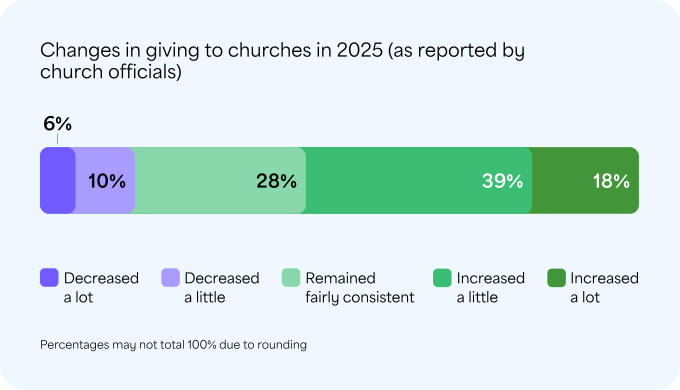
Furthermore, most church leaders report that giving to their congregation increased (57%) or remained fairly consistent (28%) between 2024 and 2025. Similar reports found that congregational income increased in 2025, largely driven by faith-based donors increasing their contributions.[15]
Church giving statistics: chart showing 57% of churches report giving increased between 2024 and 2025.
These findings are encouraging: Financially stable congregations are better positioned to sustain and expand the community programs their neighborhoods rely on. Churches are among the most significant providers of social services in communities across the United States, contributing an estimated 40% of social safety net spending in some cities.[16]

How faith-based donors gave in 2025

Studies have found that people of faith give not only to their places of worship but are also more likely to contribute to charitable causes than nonreligious households.[17] Findings from this study are consistent with this pattern: In 2025, Christian donors generously gave money, time and items to support people and organizations beyond their churches.
Faith-based donors giving chart: 61% support nonprofits, 62% individuals in need, 27% community groups in 2025.
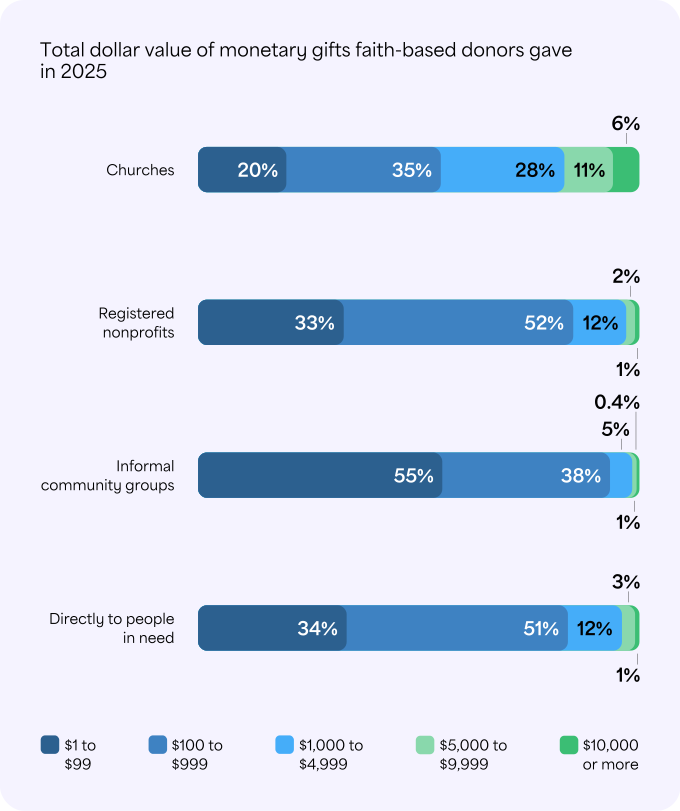
Faith-based donors tend to give higher amounts to their churches than to secular causes, even as they also monetarily support registered nonprofit organizations (61%), individuals in need (62%), and mutual aid or informal community groups (27%). In 2025, nearly half of donors (45%) reported giving more than $1,000 to places of worship. In comparison, only approximately 15% of donors reported giving over $1,000 to registered nonprofits or individuals in need.
Chart showing 45% of faith-based donors give over $1,000 to churches vs. ~15% to nonprofits or individuals.
On average, faith-based donors report giving most (54%) of their monetary contributions to churches in the form of tithes (i.e., the religious principle of 10% of one’s income given to faith-based organizations).
Tithing statistics: chart showing 54% of faith-based donors' monetary giving goes to churches in the form of tithes.
Finally, faith-based donors were also generous to their churches in ways beyond monetary giving: 63% reported volunteering their time or talents, while 46% donated items to their church in 2025.
Chart showing 63% of faith-based donors volunteer time and 46% donate goods to their church in 2025.

How churches facilitated giving in 2025

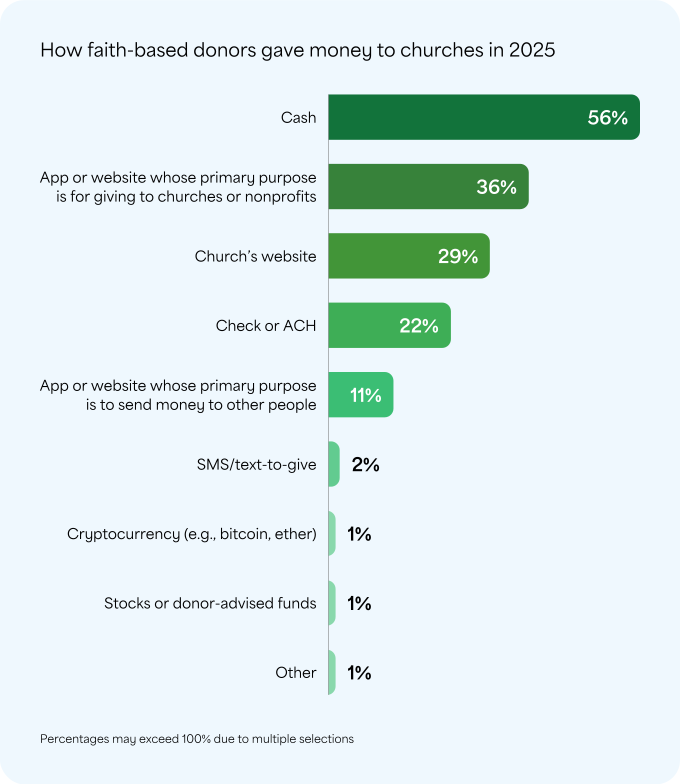
Almost all churches surveyed still offer their attendees traditional giving methods, including cash (99%) and check or automatic bank drafts (e.g., ACH; 84%). As observed in the prior Giving in Faith reports, churches continue to offer a greater variety of digital giving methods to their attendees. Notably, more churches in 2026 offer giving on their own websites (64%) than in the previous survey (56%).[2] At the same time, the percentage of churches that offer giving through mobile apps or websites designed for charitable giving to places of worship or nonprofit organizations has remained relatively unchanged (76% in 2026, compared to 77% in 2023).[2]
Church donation trends: chart showing 99% of churches offer cash giving and 64% offer giving via their own website.
In 2025, slightly more Christian donors reported giving cash to their churches (56%), up from 48% in 2023.
Chart showing cash giving rose to 56% of faith-based donors in 2025, up from 48% in 2023.
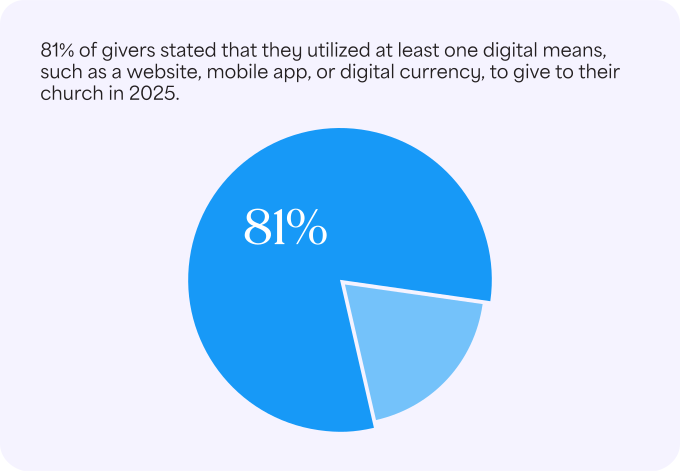
However, most faith-based donors reported using digital methods for at least some of their giving. Only 19% reported using solely traditional giving methods to give to their church in 2025, a decrease from the 23% who did not use digital giving at all in the previous Giving in Faith survey.[2]
Chart showing 81% of faith-based donors used digital giving methods for at least part of their giving in 2025.
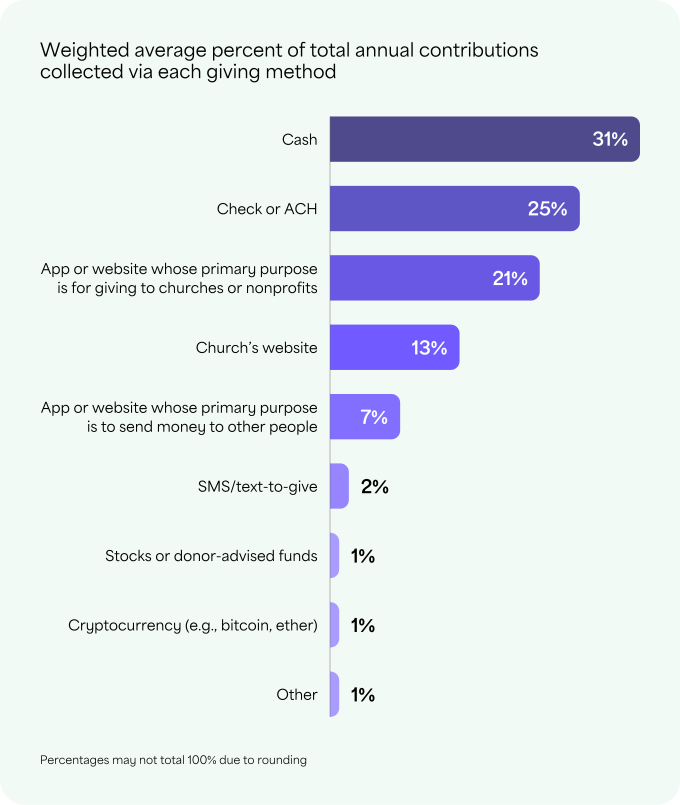
On average, churches report that 56% of their total annual contributions were made through traditional means in 2025, in line with other recent reports.[18] Among the digital methods offered, donations made through apps or websites designed specifically for church and nonprofit giving accounted for an average of 21% of churches’ annual contributions in 2025.
Church giving statistics: 56% of contributions made through traditional methods, 21% via giving apps in 2025.
The rebound in traditional giving in 2025 is not surprising, given the resurgence of in-person worship since the COVID-19 pandemic. While more than half of faith-based donors (53%) reported attending religious services in a hybrid format, most donors now attend services in person most or all of the time (76%). This is an increase from the 2024 Giving in Faith report, in which 66% of faith-based people reported attending in-person services more or all of the time.[2] Some studies show that most churches still offer a physical collection plate or box,[19] which is likely to prompt additional giving through traditional means.
Chart showing 76% of faith-based donors now attend services in person most or all of the time in 2025.
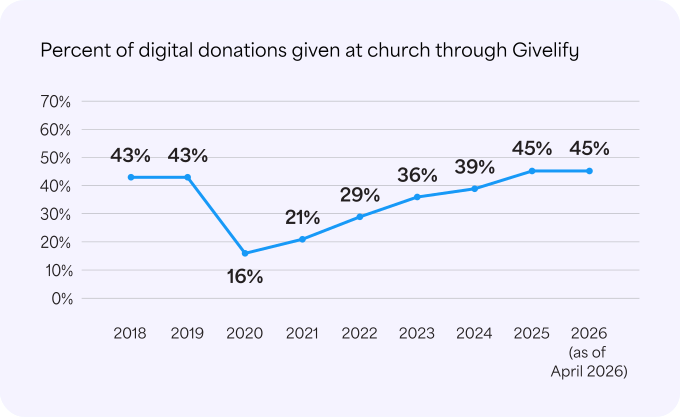
However, the increase in in-person worship attendance does not necessarily mean that only traditional giving has grown. Rather, studies suggest that attendees who worship in person are more likely to give more overall to their churches.[20] Consistent with this, digital giving has continued to grow even as in-person attendance has recovered.[15] This trend is also reflected in Givelify data, which shows that digital giving within churches continues to increase.
Church giving trends: chart showing digital giving within churches continues to grow alongside rising in-person attendance.
Combined, the survey findings and donation data suggest that congregations have mostly recovered, with in-person worship returning to levels exceeding those observed before the COVID-19 pandemic. This trend likely contributes to increased overall giving through both traditional and digital means.

2026 church giving outlook

This section examines how congregations and faith-based donors expect their generosity to evolve in the year ahead. Although the future is uncertain, congregations and their members tend to express optimism about 2026.
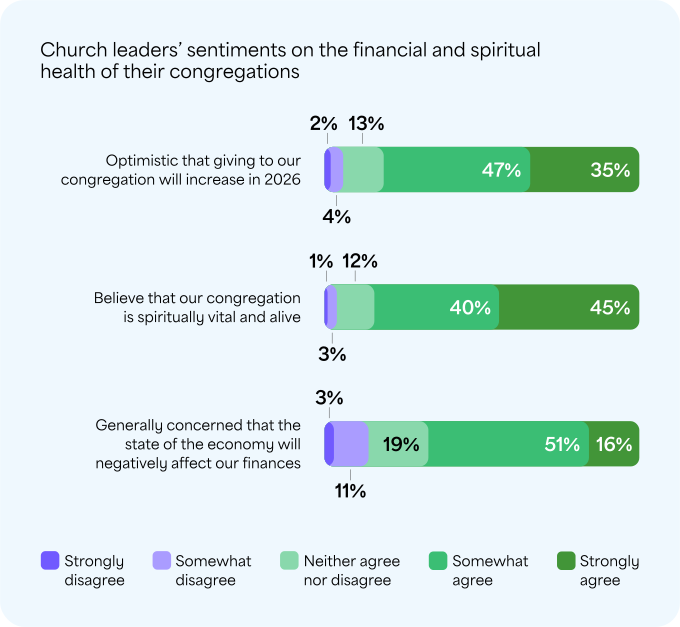
Recent reports indicate that religiosity and spirituality among church attendees have strengthened since the COVID-19 pandemic,[14], [15] with some studies suggesting that younger generations are leading a renewal in spiritual interest.[21], [22], [23] Accordingly, most church leaders in this study report that their congregations are spiritually vital and alive (85%).
This optimism also extends to expectations around future giving. While church leaders agree (67%) that they are concerned that the state of the economy may negatively affect their congregation’s finances, most (82%) also agree that they are optimistic that giving to their congregations will increase in the coming year.
Church giving statistics: chart showing 85% of church leaders report congregations are spiritually vital and alive.
Church leaders predict that overall giving (77%) and consistent giving (71%) at their church will increase in 2026.
Church giving statistics: 77% of leaders predict giving will increase, and 82% predict consistent giving will grow in 2026.
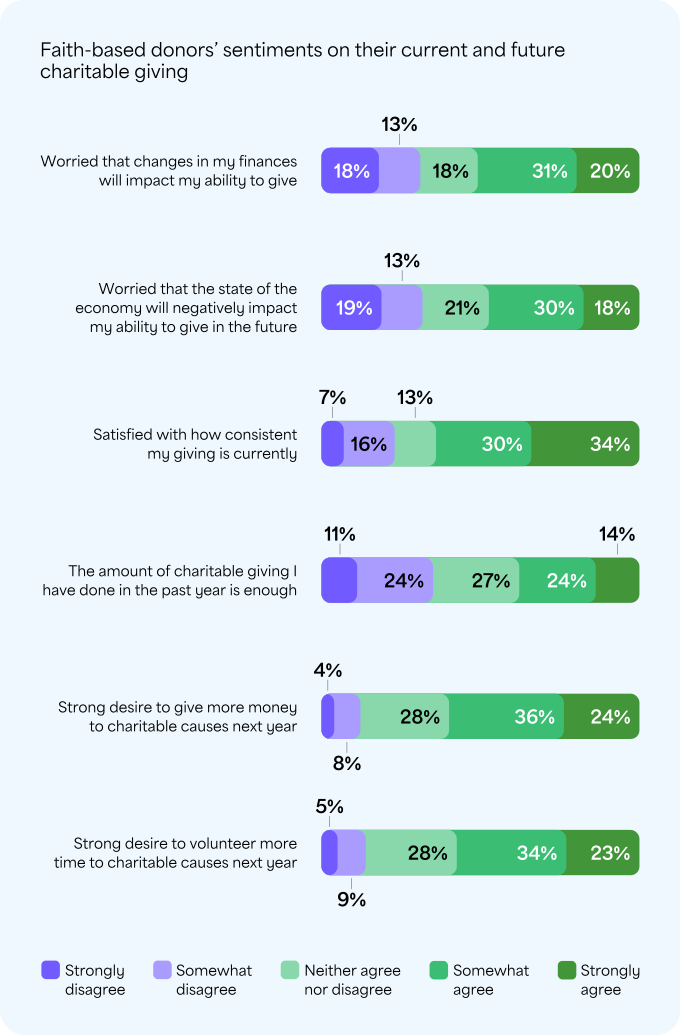
Faith-based donors share similar sentiments as their church leaders about the future. About half (51%) report concern that changes in their finances will impact their ability to give, while 48% express similar concern about the state of the economy affecting their ability to give.
Chart showing 51% of faith-based donors worry about their personal finances, and 48% worry the economy will affect giving.
While 64% of faith-based donors agree that they are satisfied with how consistent their giving is currently, only a minority (38%) agree that the level of charitable giving they have done in the past year was enough.
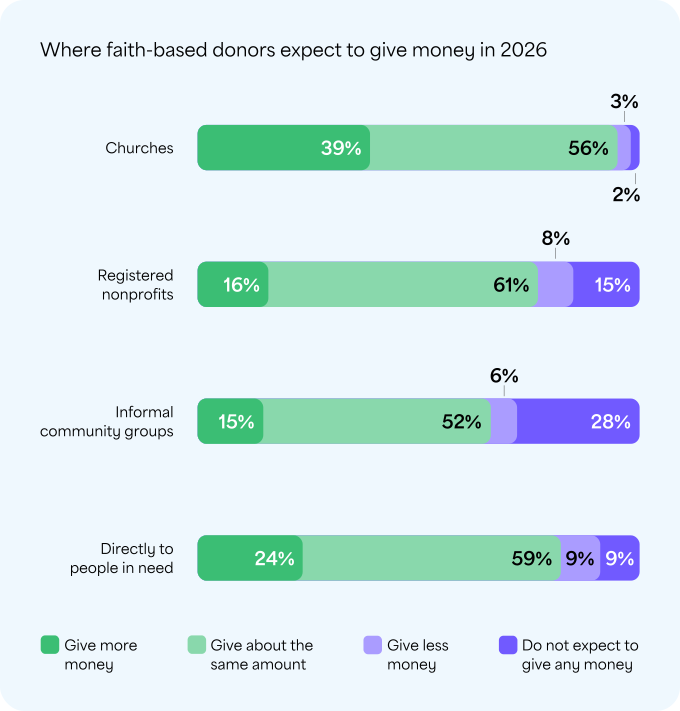
As observed in previous Giving in Faith reports,[2],[24] donors continue to commit to maintaining or increasing their generosity: 60% agree they have a strong desire to give more to charitable causes in the next year. Specifically, donors generally expect to give about the same (56%) or more (39%) to their church in 2026.
Chart showing faith-based donors plan to give more to churches (39%), nonprofits (16%), community groups (15%), and individuals (24%) in 2026.
Finally, faith-based donors also aspire to expand their generosity to other causes. Most donors predict giving about the same or more in 2026 to nonprofits (77%), informal community organizations (67%), and directly to people in need (83%).
The picture that emerges from 2025 is one of resilience and hope. Congregations reported stable or improved financial and spiritual health while donors continued to give generously. The recovery of in-person worship has been a meaningful contributor to this resilience. While church leaders and donors express some concerns about the economy, both expect generosity to remain or increase in 2026.
Optimism and resilience alone, however, do not translate into a thriving congregation. Churches need consistent generosity to sustain the momentum of their growth and to support the services their communities rely on, which begins with understanding what it means for a donor to give consistently.