Our Consistent Giving Model
The Consistent Giving Model builds on Brister and colleagues’ model of lifetime charitable giving while focusing on how consistent giving habits are formed and maintained within churches contexts.
This focus reflects an important distinction: Faith-based donors often approach giving to their church differently than giving to secular causes. As discussed in Chapter 5, giving to causes outside the church more closely aligns with general models of nonprofit giving, while church giving is shaped more directly by faith, relationship with the church, and spiritual practice. Existing models tend to generalize across these contexts and underemphasize the role of faith in giving to places of worship.
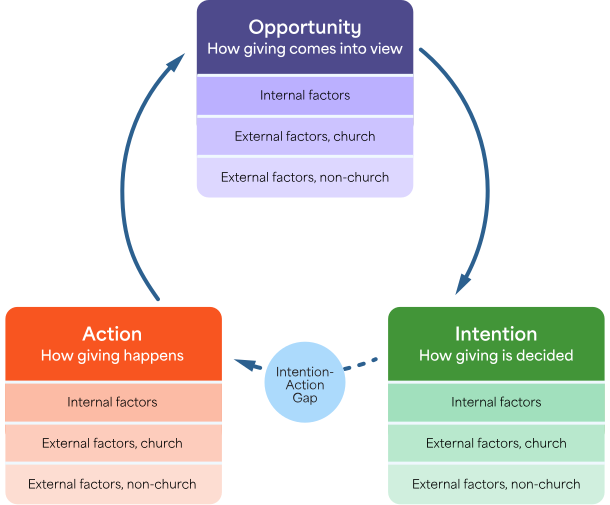
Like Brister et al.’s model of lifetime charitable giving, the Consistent Giving Model divides the giving process into three phases: Opportunity, Intention, and Action. It also distinguishes between external and internal motivational factors. Many of the influences identified in earlier frameworks are incorporated in our model, but they are now embedded within a faith-based context. In faith-based giving, a donor’s identity as a generous giver plays a central role in shaping how opportunities to give are perceived and acted upon.
The Consistent Giving Model™
This model illustrates how repeated cycles of giving, combined with meaningful reinforcement, can help faith-based donors develop lasting giving habits
How to attribute this model
Please attribute:
Consistent Giving Model, Givelify Philanthropic Research & Insights.
Looking to cite the full report?
See the Methodology page.Although the model is presented in phases, these phases are not strictly sequential. In faith-based giving, the intention to give may exist before a specific opportunity arises. Donors may already hold a religious conviction or enduring desire to give that becomes activated when an opportunity is presented. Additionally, giving is rarely a one-time act. Rather, repeated acts of giving often reinforce a donor’s faith, identity, and generosity practices over time. The model therefore describes a dynamic and recurring process rather than a rigid sequence.
However, the Consistent Giving Model introduces three key innovations that advance this foundation. First, it explicitly accounts for the fact that the giving process must recur consistently over time to form a habit, not just a single act. Second, because this framework is focused specifically on church giving, it positions the donor-church relationship as a central external factor, recognizing its unique and ongoing role in shaping consistent giving behavior. Third, it proposes that motivations for giving are hierarchical in their level of influence on giving. Within this hierarchy, internal motivations — grounded in religious conviction, personal values, and spiritual identity — function as the strongest and most durable drivers of consistent giving, followed by church-related external factors, with non-church external influences having the weakest effects.
Internal motivations are the strongest drivers
Intrinsic motivation refers to engagement in an action because the action itself is inherently rewarding.[49] In contrast, extrinsic motivation involves performing an action to receive external rewards, such as money or praise, or to avoid punishment.
In the Consistent Giving Model, internal factors include personal values, beliefs, convictions, and identities. For faith-based donors, these internal motivations include having a religious conviction to give, identifying as a generous giver, and holding altruistic or empathetic values.
Research consistently finds that intrinsic motivation produces higher quality and more sustained behavior than extrinsic motivation, and this holds for charitable giving.[50] In this framework, we argue that these internal factors are the strongest drivers of consistent prosocial behaviors. This perspective is supported by prior research on prosocial motivation.[51], [52]
Internal motivations are more durable,[49] and studies find that intrinsically motivated prosocial acts produce stronger psychological and emotional benefits for the giver than those driven by external pressure or obligation.[53] These benefits to wellbeing, in turn, reinforce future generosity and make continued giving more likely.[54]
As donors grow in their spiritual journeys, they may continue to develop and strengthen these internal motivations, each of which influences giving differently across the three phases of the Consistent Giving Model. The external and internal factors discussed at each phase are not exhaustive; they are included to illustrate how common faith-based motivations, relationships, barriers, and reinforcements fit within this model.
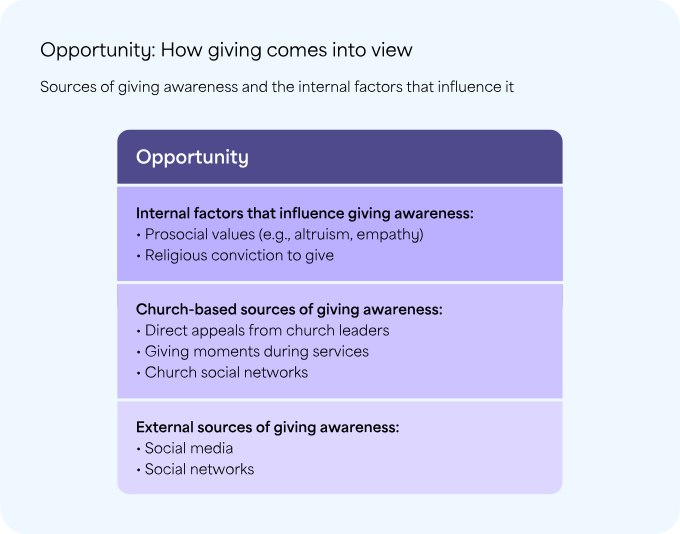
Opportunity: How giving comes into view
Within the Opportunity phase, external and internal factors shape how donors are made aware of giving opportunities. This includes how the ask to give is framed and how it is initially perceived by the donor.
These opportunities often emerge through direct appeals from the donor’s church. Research shows that donors are more likely to give when they are asked,[55] and they are even more likely to give when asked by someone they trust, such as a clergy member.[56]
Our survey findings reinforce this pattern. Most faith-based donors (79%) report that their churches ask to give an appropriate number of times, while only 11% feel they are asked too often or too much. In contrast, 29% of church leaders believe they may be asking donors to give too often or too much.
This gap suggests that church leaders are often more cautious in their approach to asking than donor behavior supports. As a result, churches may be missing opportunities to invite giving, particularly when donors are open and receptive to those requests.
Some external factors that originate both within and outside of a faith-based donor’s church include awareness of a need. For example, some studies find that social media[57] or advertisements[58] can increase awareness and create opportunities for charitable behavior. Similarly, when teaching about generosity, churches can share information that raises awareness of local, regional, or global needs for aid.[59]
Another external factor that can shape giving opportunities is a church’s culture of generosity. Teaching generosity can serve as an indirect appeal to give, and churches that promote this culture increase awareness of ways to contribute.[60] In our survey, most church leaders report teaching their congregants about generosity to some extent.
Additionally, teaching generosity helps instill internal prosocial values, such as empathy, thereby heightening donors’ awareness of opportunities to give, particularly when needs are unspoken. Donors with strong religious convictions about generosity may be more likely to recognize opportunities to offer their aid to others.[61], [62] Similarly, having empathy or altruistic values increases the likelihood that donors will seek opportunities to help or proactively identify unmet needs within the church and in their community.[63]
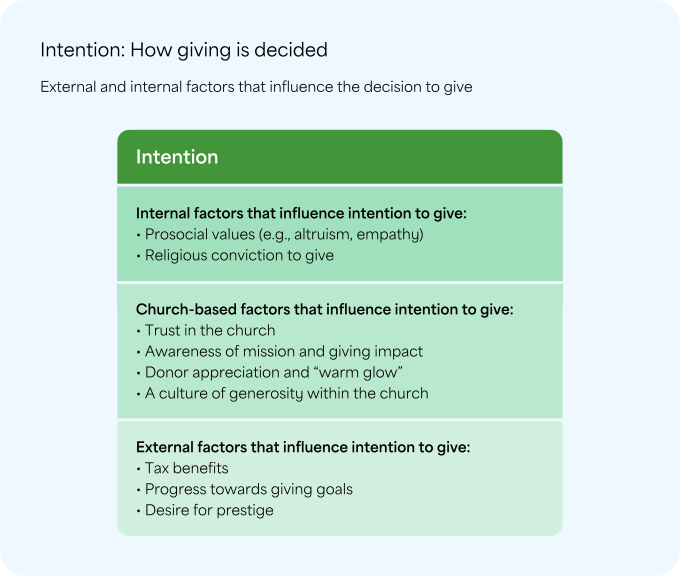
Intention: How giving decisions are shaped
After faith-based donors are presented with an opportunity to give, they evaluate it through their perceptions, beliefs, and preexisting inclinations toward giving. External and internal factors further shape those evaluations, ultimately influencing — positively or negatively — their decision to give.
Many studies on nonprofit giving suggest that external incentives influence whether donors ultimately intend to give. Because these incentives often appeal to fundamental human motivations, findings from broader philanthropy research are likely applicable to faith-based giving as well.
For example, donors may be motivated by the tax benefits of deducting charitable donations on their tax returns.[64] Donors who set giving goals, such as pledges or commitments, may also have a stronger intention to give when they are close to reaching those goals.[65] Other donors may be motivated by a desire for social prestige,[66] such as public recognition for their giving. However, based on survey responses from donors and church leaders, this type of recognition appears to be less common in faith-based settings.

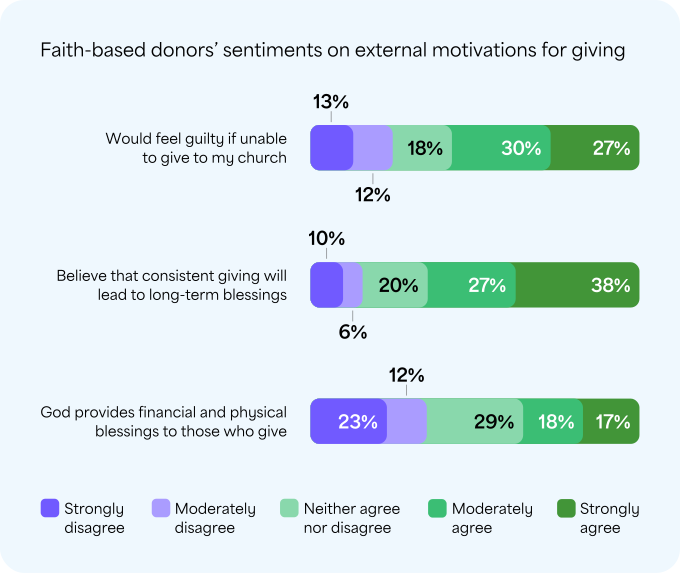
Behavioral science suggests that expectations of external rewards or avoiding punishment often provide incentive for desired behaviors.[49] However, this may not universally apply to faith-based giving. Donors report mixed feelings about feeling guilty when they cannot give (i.e., to avoid punishment). They also express mixed beliefs about whether giving will lead to blessings, a view that may be more common among those who belong to denominations that teach prosperity theology.[48]
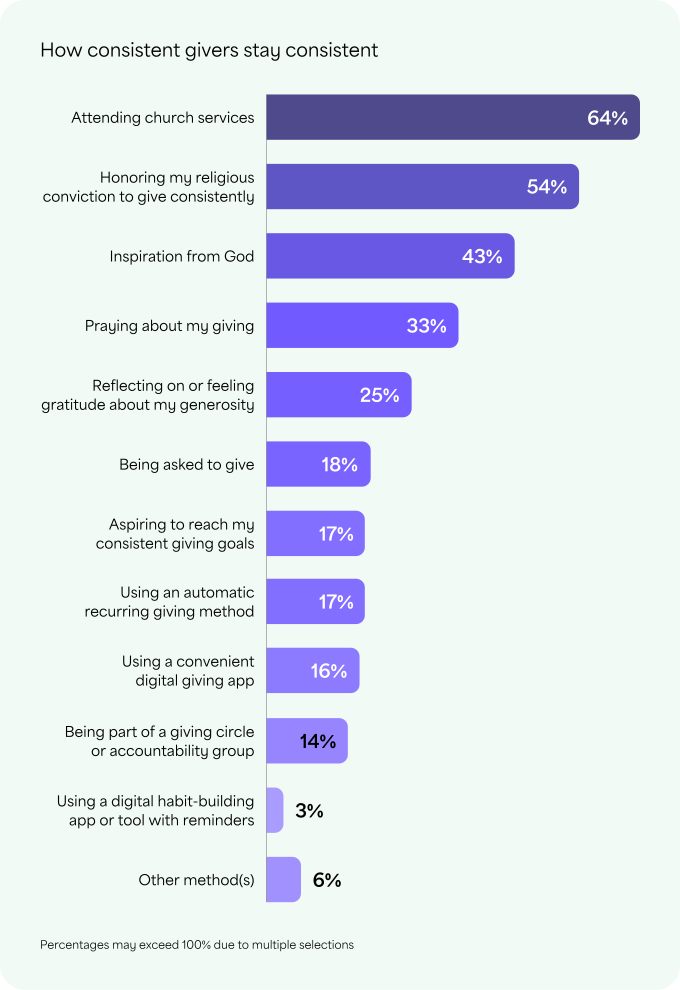
Several external factors that can influence the intention to give also occur within the church itself. Accordingly, most consistent donors report that church attendance is one of the primary ways they maintain consistency in their giving.
Additionally, several studies report a positive relationship between more frequent church attendance and a higher propensity to give,[61] likely shaped by underlying religiosity and the social and cultural dynamics of congregational life. Those who are more religiously devoted are more likely to attend services. The survey shows that a stronger religious identity was significantly and positively correlated with more frequent church attendance (r = 0.40, p< .001) among faith-based donors.
Frequent church attenders also choose to participate in an environment where they may be asked to give, whether during services or through activities affiliated with their church, thus encountering opportunities to practice prosocial behaviors.[62], [68]
Close ties within a congregation can further increase the likelihood of giving, often driven by social pressure and a desire for social approval.[59], [60]
Social norms within churches, such as observing the giving behaviors of others or repeated exposure to giving practices (e.g., during giving time), can also increase the propensity to give.[59], [60] While most churches report teaching generosity, only about half of church leaders report modeling it specifically, representing a potential missed opportunity to further encourage giving.
Church attendance can thus function as a mechanism for fostering consistent giving across the Consistent Giving Model by exposing donors to opportunities, providing avenues for action, and shaping intention through congregational norms, relationships, and expectations.
Beyond instilling prosocial values, churches can also share information about the impact of giving, their mission and outreach efforts, and how monetary contributions are used. Studies show that knowledge of a charity or cause (i.e., a church’s mission and outreach) can increase the propensity to give among faith-based donors.[59] This is because people are more likely to support causes or organizations that align with their identities and values.[63]
Research also consistently links knowledge about impact to greater intent to give, as donors value making a meaningful difference.[69] Survey responses support extending these findings to faith giving: Faith-based donors generally agreed that knowing the impact of their giving makes them feel good about giving and encourages them to continue giving to their churches.
For congregations engaged in community outreach, this finding suggests a practical priority. When churches share stories about families served through their food pantry or students supported through a tutoring program, they help donors see what their generosity makes possible. Donors who can see the impact of their giving are more motivated to continue to be generous.
More broadly, trust in an organization is associated with a higher likelihood of giving,[70] and people are more likely to give to organizations they participate in and feel positively connected to.[71]
Our survey findings reinforce this pattern within a faith-based context: The most consistent givers (70% of this sample) report understanding their church’s mission, trusting how their church uses donations, and believing their giving is making an impact.
Studies show that recognition for generous actions can motivate giving by stimulating feelings of “warm glow” and gratitude, which in turn increase the likelihood of giving again.[72], [73], [74] Most, but not all, donors in our survey generally report feeling these warm feelings and a sense of fulfillment after giving most of their gifts to their churches.
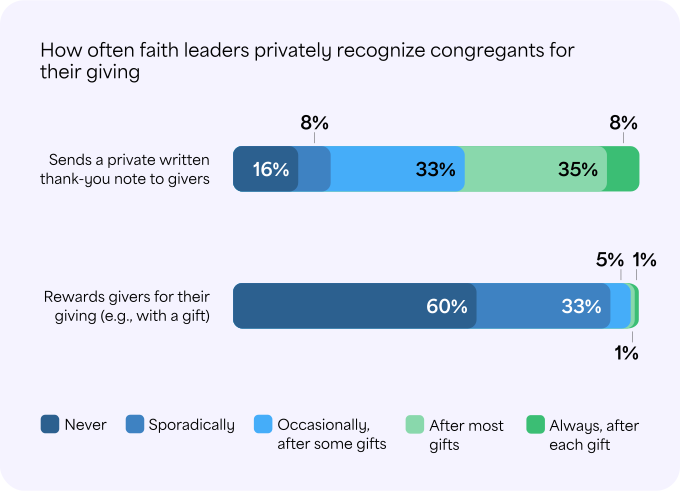
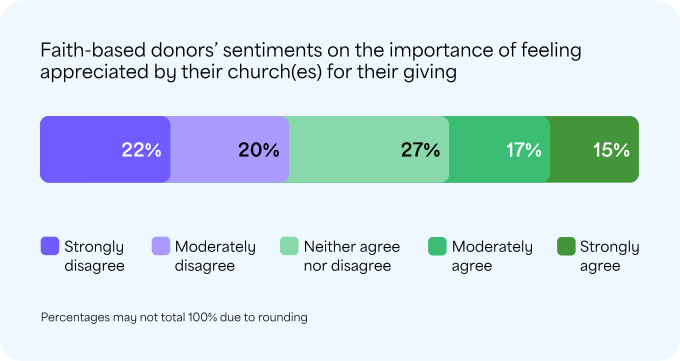
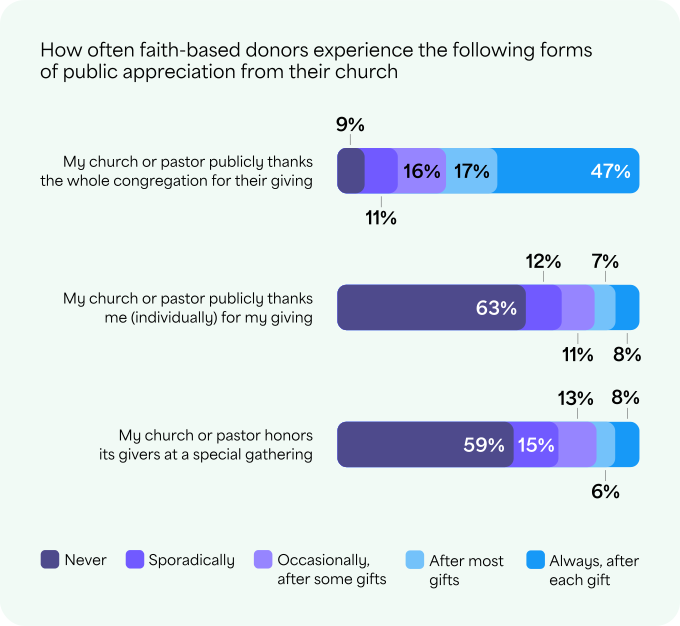
While church leaders report frequently recognizing their members for their generosity, our survey finds that most faith-based donors say they do not often receive private expressions of appreciation. Additionally, 40% of donors feel that their giving is appreciated occasionally or less frequently, not after most of their gifts. This gap suggests that church leaders may overestimate both how consistently their congregants give and how recognized those congregants feel. In practice, personal expressions of gratitude appear to be less common than leaders perceive.
At the same time, faith-based donors may be hesitant to express a desire for recognition, as doing so can feel at odds with the values associated with giving. However, churches can strengthen relationships with their donors through more frequent, private expressions of gratitude. Studies show that faith-based donors tend to prefer individual, private appreciation over public or small group appreciation.[75]
Finally, several internal factors introduced in the Opportunity stage, such as giving theology and personal values, also positively influence the intention to give.
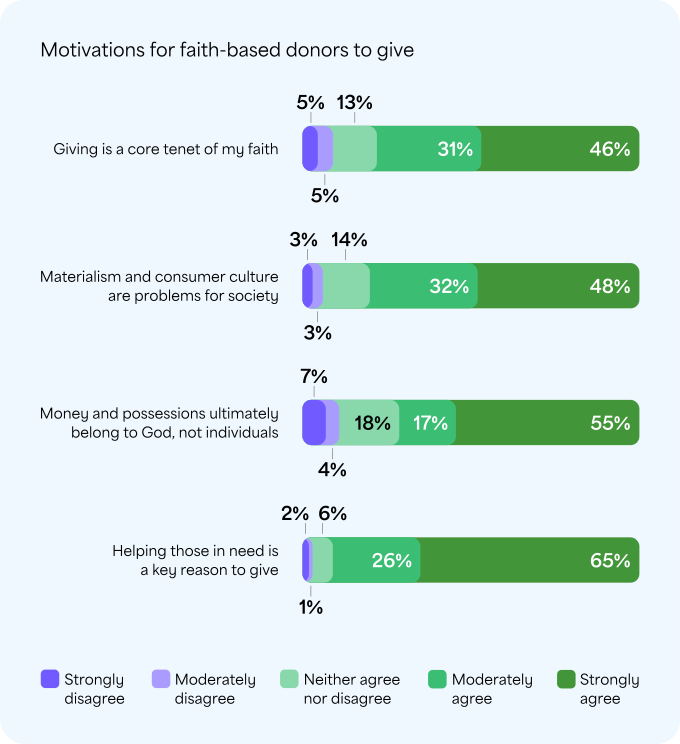
Values like empathy and altruism increase the propensity to give, as individuals generally intend to behave in ways that align with their beliefs.[63] The strength of prosocial values in stimulating the intent to give also holds true for faith-based giving: Almost all donors surveyed believe that helping those in need is a key reason for them to give.
Similarly, a strong religious conviction to give, often shaped by religious teachings and participating in a culture of generosity within the church, can further strengthen giving intentions.[68] Our survey findings reinforce this pattern: Consistent givers report that honoring their religious conviction to give is a way they maintain consistency in their giving. More generally, faith-based donors agree that giving is a core tenet of their faith and that the practice of giving helps them grow spiritually and is an act of worship.
What these studies show is that donors with altruistic values or who associate generosity with spiritual growth are generally more willing to provide aid to others in need. Thus, when presented with opportunities to give, they tend to respond positively.
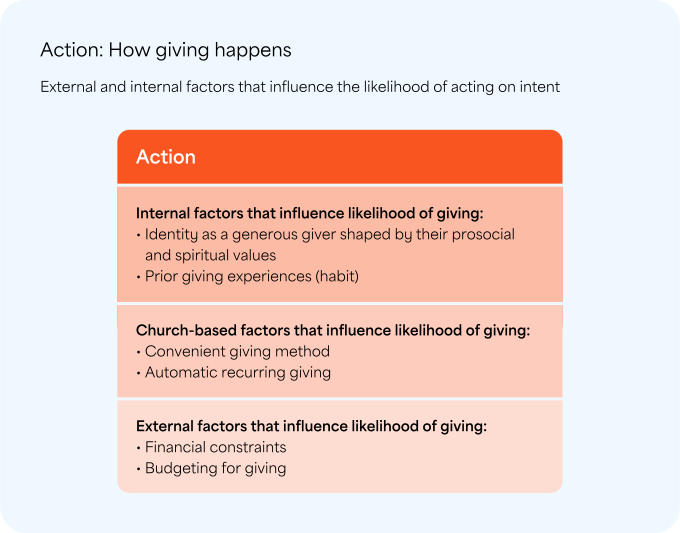
Action: How giving becomes behavior
While donors often express a desire to give, this intention does not always result in the act of giving. When donors fail to act on their intentions, this is known as the intention-action gap.[34]
External factors can significantly influence whether donors follow through. These include financial constraints, budgeting practices, and awareness of current giving levels.
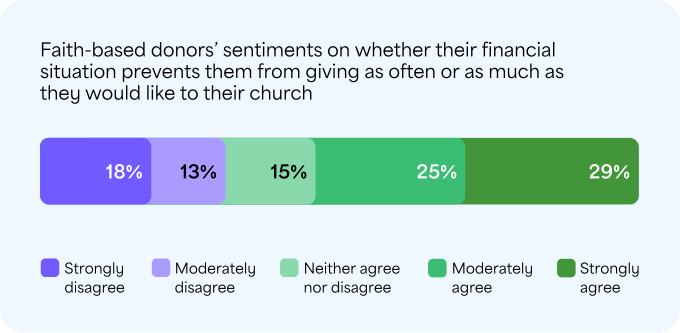
Overall, faith-based donors are mixed on whether their current financial situation prevents them from giving as much as they aspire to their church.
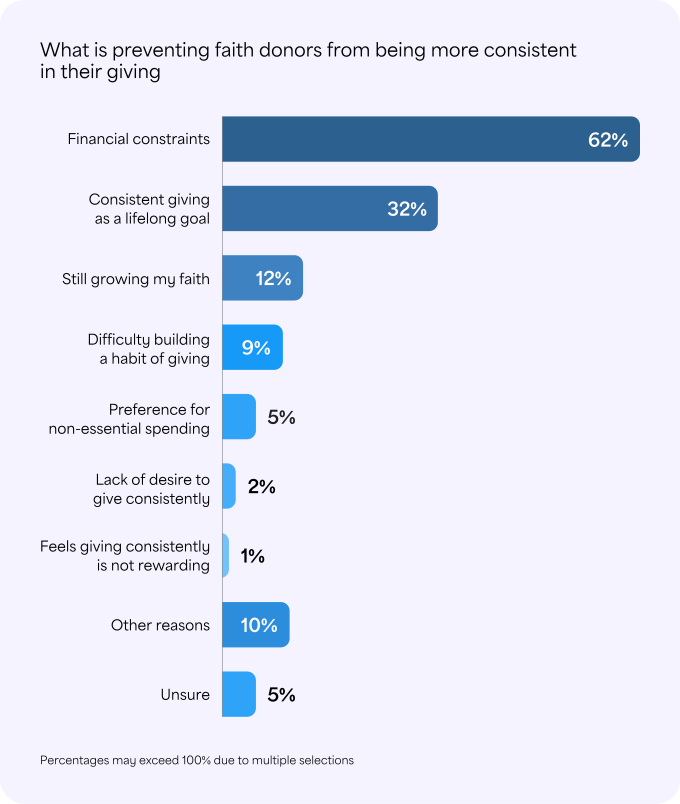
A deeper dive, however, shows that faith-based donors who aspire to give more consistently (Awakening Givers) are most likely to cite financial constraints as a barrier to consistent giving than those who are already consistent. These donors also report less stable employment and greater concerns about how the economy or their financial situation will impact their ability to give (Chapter 5).
Studies show that individuals mentally budget for charitable giving, but they often treat it as a discretionary expense.[76] For donors with financial stability, reframing giving as a necessary expense may support more consistent giving behavior.
Churches can also influence the act of giving by ensuring that giving methods are convenient and accessible at the moment donors feel inspired to give.
Recurring giving options may help sustain consistency in donors who are already consistent, intend to continue giving consistently, are financially stable, and prefer to automate their giving (see the Recurring Giving subsection in
Chapter 7). However, for donors who are not yet consistent, reliance on recurring giving options may limit opportunities to intentionally engage with the motivations and practices that support a consistent giving habit.
Finally, internal factors such as positive past experiences and personal values, including altruism and religious conviction, reinforce whether intention translates into action. Reflecting on prior giving experiences can strengthen future behavior,[77] while donors who identify as altruistic or benevolent are more likely to act in ways that align with those identities.[63], [67]
Together, these internal and external influences determine whether giving occurs in a single moment or repeats often enough to become a consistent giving habit.
Habit: How giving becomes consistent
Habit formation occurs when a behavior is repeated often enough that it requires less conscious effort and motivation over time.[78] One model of habit formation shows that, early in the process, more self-control is required to act on the intention to engage in the habit. As donors begin forming a giving habit, they may require greater motivation and reinforcement.
If the donor does not already have strong internal motivations to give, external motivators, such as feeling gratitude or seeing others give, can help to nudge them toward giving. As these intrinsic motivations develop, less external reinforcement is required for donors to move from intending to give to actually giving.
For church leaders, this suggests that new or inconsistent donors may need more active encouragement than those who have already built a consistent giving habit. Church leaders can support habit formation by cultivating a culture of generosity, providing private recognition, building trust, clearly communicating their church’s mission, and demonstrating the impact of giving. As internal motivations deepen, the habit of consistent giving becomes more self-sustaining.
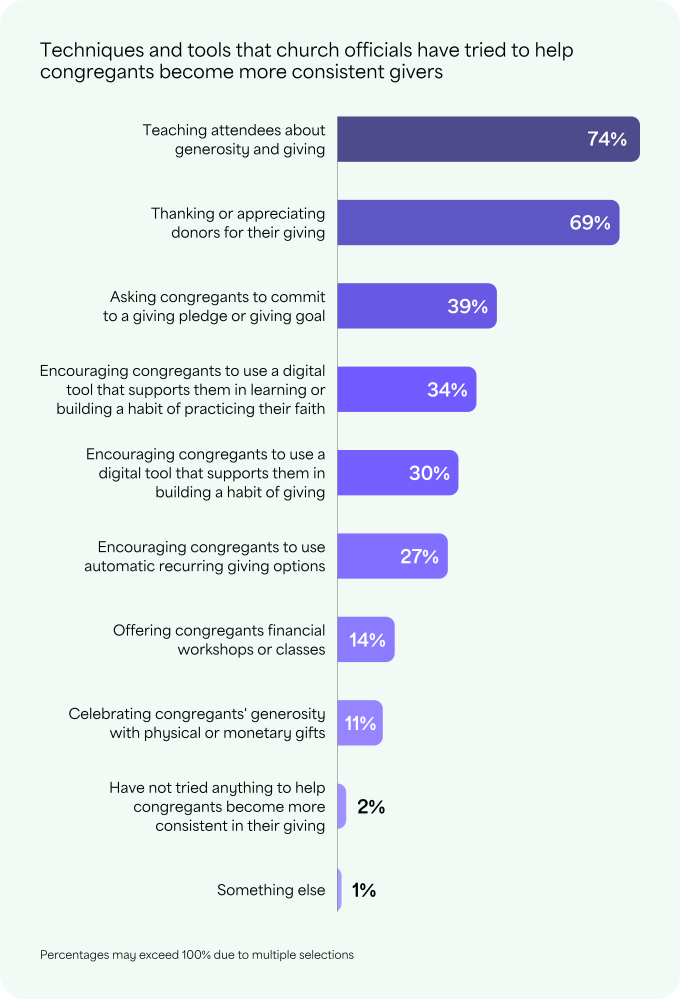
Church leaders report trying a wide range of strategies to encourage consistent giving, though many acknowledge mixed success. Most believe that thanking donors would at least somewhat help congregants become more consistent in their giving. Yet nearly one-third (31%) report that they did not thank or express appreciation to their donors.
Survey findings also suggest that some of the tools and techniques church leaders have may not align with the needs or motivations of different donors. For example, most church leaders believe that encouraging recurring giving would help donors become more consistent. However, as discussed in Chapter 7, many donors who do not use recurring giving options already give consistently.
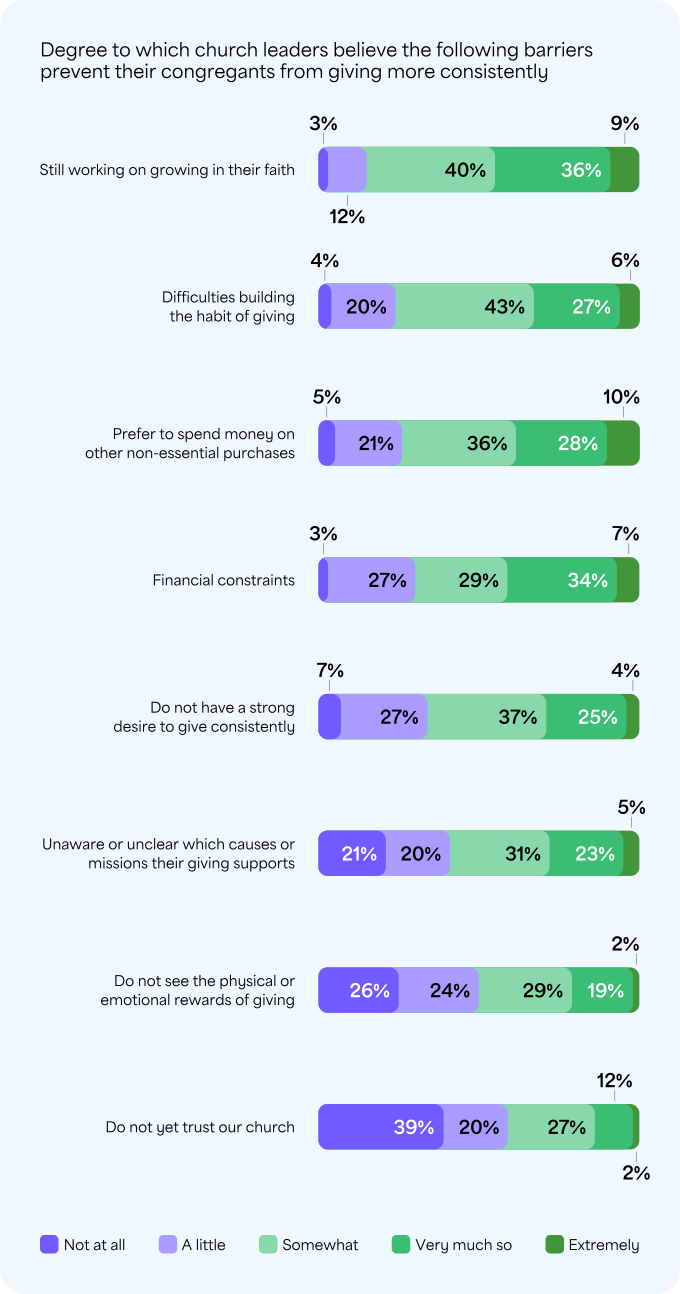
Church leaders may also underestimate the barriers that prevent donors from giving consistently. While 30% of church leaders believe financial constraints are not a meaningful barrier to consistent giving, many inconsistent donors identify financial strain as one of their greatest obstacles. Despite this, few church leaders report offering practical financial support: Only 14% say they have provided workshops or classes focused on financial wellbeing or stewardship.
Sustaining habit: How giving continues over time
While donors who have developed a habit of giving are more likely to repeat this behavior, habit alone does not guarantee long-term consistency. Research suggests that ongoing motivation is still needed to sustain habitual behavior.[78]
Church leaders, therefore, play an important role not only in helping donors establish consistent giving but also in reinforcing it over time. Practices such as expressing appreciation, maintaining trust, and fostering a culture of generosity can help sustain these giving habits.
Advancing the understanding of consistent giving
The Consistent Giving Model provides a new framework for understanding how consistent giving habits are formed and sustained within faith communities — from opportunity to intention to action, and ultimately to habit formation and reinforcement.
This model represents a novel contribution to the study of faith-based giving by integrating behavioral science with the unique motivations that shape generosity in religious communities. The field experiments presented in Chapter 7 offer early empirical support of how these principles operate in the practice of faith-based philanthropy.
The Consistent Giving Model™
This model illustrates how repeated cycles of giving, combined with meaningful reinforcement, can help faith-based donors develop lasting giving habits
How to attribute this model
Please attribute:
Consistent Giving Model, Givelify Philanthropic Research & Insights.
Looking to cite the full report?
See the Methodology page.