The financial impact of the consistency shortfall
Together, donors’ intention-action gap and church leaders’ perception gap create the conditions for a third and more consequential problem: a consistency shortfall whose financial implications extend across the entire religious charitable sector. Our estimation model suggests that even moderate reductions in the consistency shortfall could produce substantial gains in total giving. This model uses assumptions about donor behavior and average giving at both the national and congregation levels in its calculations. Additional details are provided in the
Methodology section.
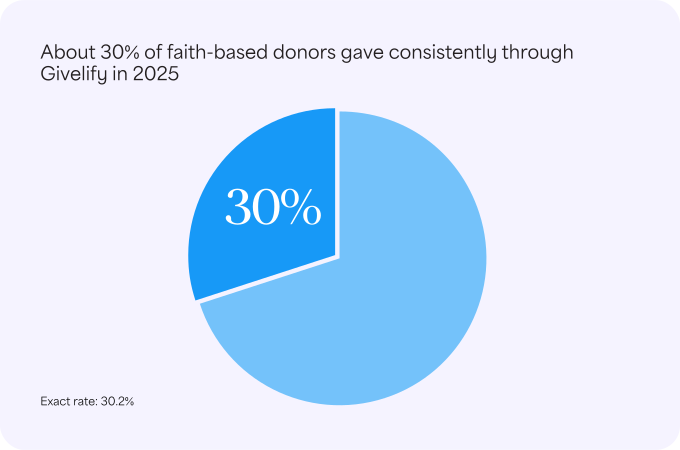
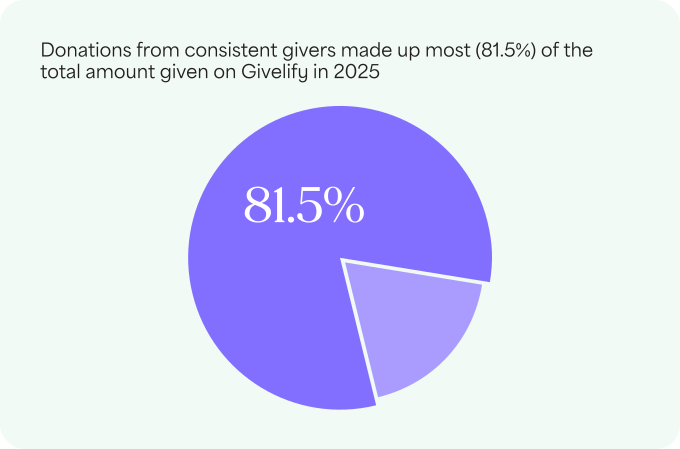
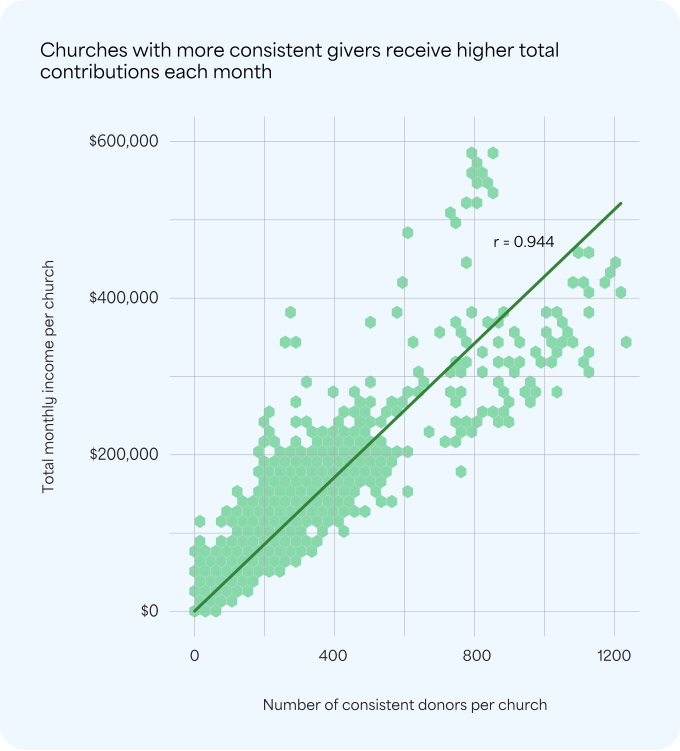
Across the United States, there are approximately 350,000 congregations[15] that collectively receive almost $150 billion in annual giving.[1] Consistent givers represent 30.2% of all donors but account for 81.5% of total giving.
If the share of consistent givers increased to 40% without any change to the total number of donors and average giving behavior, total giving would increase by approximately 25%. Applied across the entire faith-based charitable sector, this increase in giving consistency would correspond to an estimated $25 to $30 billion increase in annual giving.
Applying this estimation model to a typical congregation predicts similar growth in giving. The median congregation receives approximately $205,000 in annual contributions.[15] Under this model, a 25% increase in total giving would correspond to approximately $50,000 in additional annual giving, even when the only change is growth in consistent givers.
It should be noted that, for individual congregations, this estimate would vary depending on their size, socioeconomic composition, and geographical location. Studies find that attendees of small churches tend to give more per capita than those in larger congregations.[39] Socioeconomic composition also tends to vary by church size. Barna finds that medium and large churches are more likely to attract adults with higher levels of education and income.[40]
Geographic differences also shape giving patterns. Individuals in regions with higher levels of religious conviction, such as the “Bible Belt,” tend to give a greater share of their income to charity, despite having lower median incomes than those in more secular areas (e.g., San Francisco, New York City).[41] At the same time, attendees of rural churches in certain regions often have lower household incomes,[42] which may limit their capacity to give compared with those in wealthier areas.
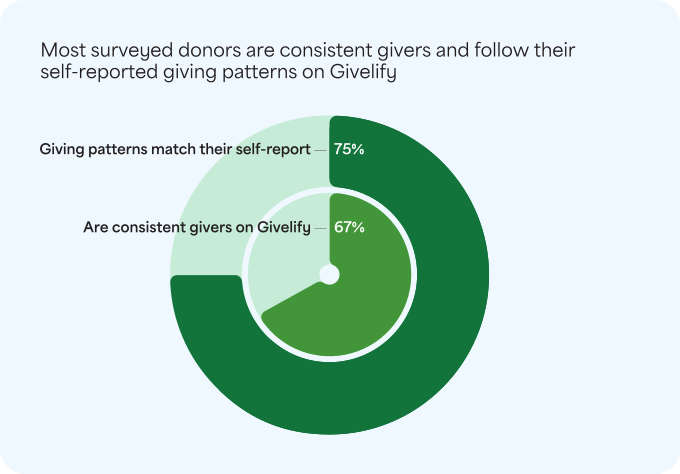
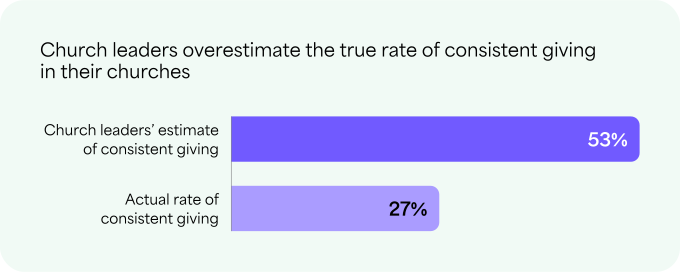
Taken together, these findings highlight a gap with meaningful implications for congregational financial health: Most churches have far fewer consistent givers than their leaders estimate, yet consistent givers account for the majority of giving.
While this estimation model is not a forecast, it gives church leaders a concrete sense of what improving donor consistency could mean in dollars for their congregation. It highlights how changes in donor composition, particularly increases in consistent giving, can significantly affect total giving at both the congregational and national levels.
The consistency shortfall, the unrealized giving that results when donors do not give as consistently as they intend and when churches do not fully recognize how large that gap is, carries a significant financial cost. If the share of consistent givers increased to reflect donors' stated aspirations, annual giving across U.S. congregations could increase by an estimated $25 to $30 billion. Closing this gap begins with understanding who consistent donors are and what distinguishes them from those who give less regularly. Chapter 5 explores these differences by introducing four distinct profiles of faith-based donors.